Key Takeaways
- Upcycled fashion starts with repairing, reshaping, and restyling what you already own.
- Thrifted outfits feel more wearable when you focus on fit, fabric condition, and easy layering.
- A brush-down and a steam can make a tired coat look cared for again — no replacement needed.
- Zero waste fashion is often more about repeat wear and garment care than constant DIY projects.
- A hem, a button, and a knot cost nothing but ten minutes — and fix most “never wear it” reasons.
- One anchor piece you can name three outfits for beats five trend buys.
- Start with the drawer you already own: fix, brush, restyle — and buy only when a gap survives all three.
Table of Contents
- Introduction
- Quick Picks
- 1. Learn a Few Beginner Upcycling Fixes Before Buying Anything New
- 2. Refresh the Clothes You Already Love Before Replacing Them
- 3. Use Easy Layers to Make Thrifted Outfits Feel More Intentional
- 4. Turn Clothing Care Into Part of Your Zero Waste Fashion Routine
- 5. Build Repeatable Outfit Formulas Around One Strong Piece
- 6. Choose One Investment Layer That Can Transform Simple Outfits
- 7. Use Upcycled Denim and Basics as Your Everyday Creative Playground
- Product Comparison Table
- FAQs
- Conclusion
Introduction
Upcycled fashion is one of the easiest ways to make your wardrobe feel fresh without falling into the cycle of buying more and wearing less. It is also the cheapest creativity there is: the raw material is what you already own.
A zero-waste wardrobe does not need to be perfect, minimalist, or built from expensive labels. In real life, it usually looks like repairing a hem, restyling thrifted outfits, refreshing old knitwear, and learning how to upcycle clothes so they fit your style now.
The good news is that small changes add up fast. A wooden clothes brush can bring a tired coat back into rotation. One well-chosen cardigan can make secondhand basics feel intentional. And the most useful fixes of all — a hem, a button, a knot — cost nothing but ten minutes. Denim gets a special mention: it is the most forgiving fabric to practise on, which is why it opens the closing section.
The seven ideas below all hang on one simple filter — run every piece through it before anything leaves the house:
- Repair what is still worth wearing
- Refresh what looks tired
- Restyle what feels hard to pair
- Replace selectively only when a gap is real
One honest note before the list: every piece linked below was opened and checked in stock, size by size, on the seller’s own site on 12 August 2026. Stock moves, but that is where things stood.
“Wear it again. Mend it quietly. Style it like you mean it — most of the wardrobe you want is already hanging in the one you have.”
Real upcycled fashion is quieter than the before-and-after videos — and it starts with thrifted outfits and zero waste habits, not a shopping cart.
🌿 Quick Picks: The Zero-Waste Wardrobe Pieces
In a hurry? Three care tools first, then five pieces to wear. Every button opens that item on the seller’s own site. If you only look at one, make it the lint brush — it rescues the most clothes for the least effort:
The Washing Bag ↗
The Dryer Balls ↗
The Sneakers ↗
The Knit Cardigan ↗
The Midi Dress ↗
The Hemp Blazer ↗
The Denim Jacket ↗
1. Learn a Few Beginner Upcycling Fixes Before Buying Anything New
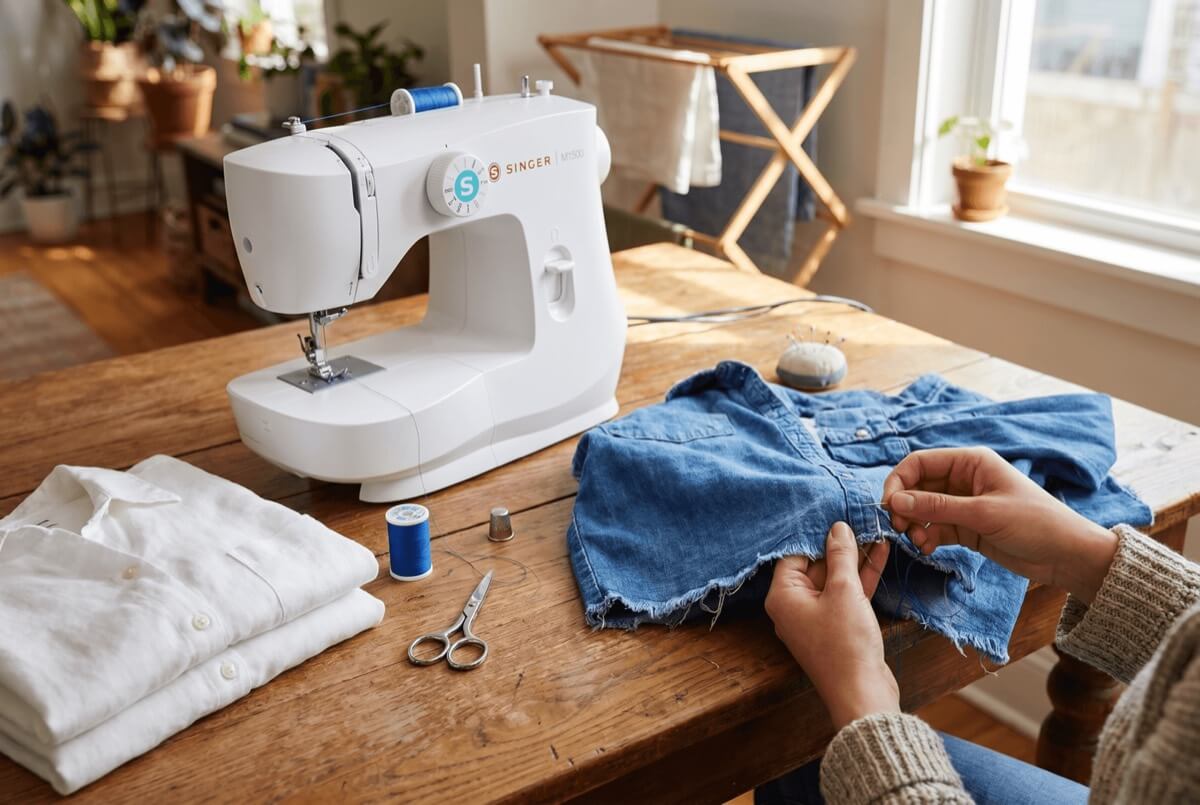
One of the best upcycled wardrobe ideas is also the least dramatic. Start with tiny fixes that remove the reasons you stopped wearing something: too long, too loose, missing a button, small split seam, awkward sleeve length, or a shape that feels dated.
These are the kinds of changes that make upcycled clothing feel realistic, not intimidating. You do not need advanced sewing skills — or a sewing machine — to hem trousers, shorten a simple skirt, add patches to worn denim, or bring in a boxy thrifted shirt. A hand needle, a spool of neutral thread, and a quiet evening cover almost all of it.
Pro Tip: Keep a small “fix first” pile instead of a donation pile. If an item only needs ten minutes of effort to become wearable again, it deserves one more chance. And if you want more ready-to-wear inspiration once the mending is done, our zero-waste fashion finds carry the same spirit.
We will be straight with you: this section has no shopping list on purpose. Basic needles, thread, and scissors are in every supermarket, and probably already in a drawer at home. The whole point of this step is that it costs nothing — and none of the makers we trust sell sewing kits anyway, so we would rather tell you that than dress one up.
2. Refresh the Clothes You Already Love Before Replacing Them
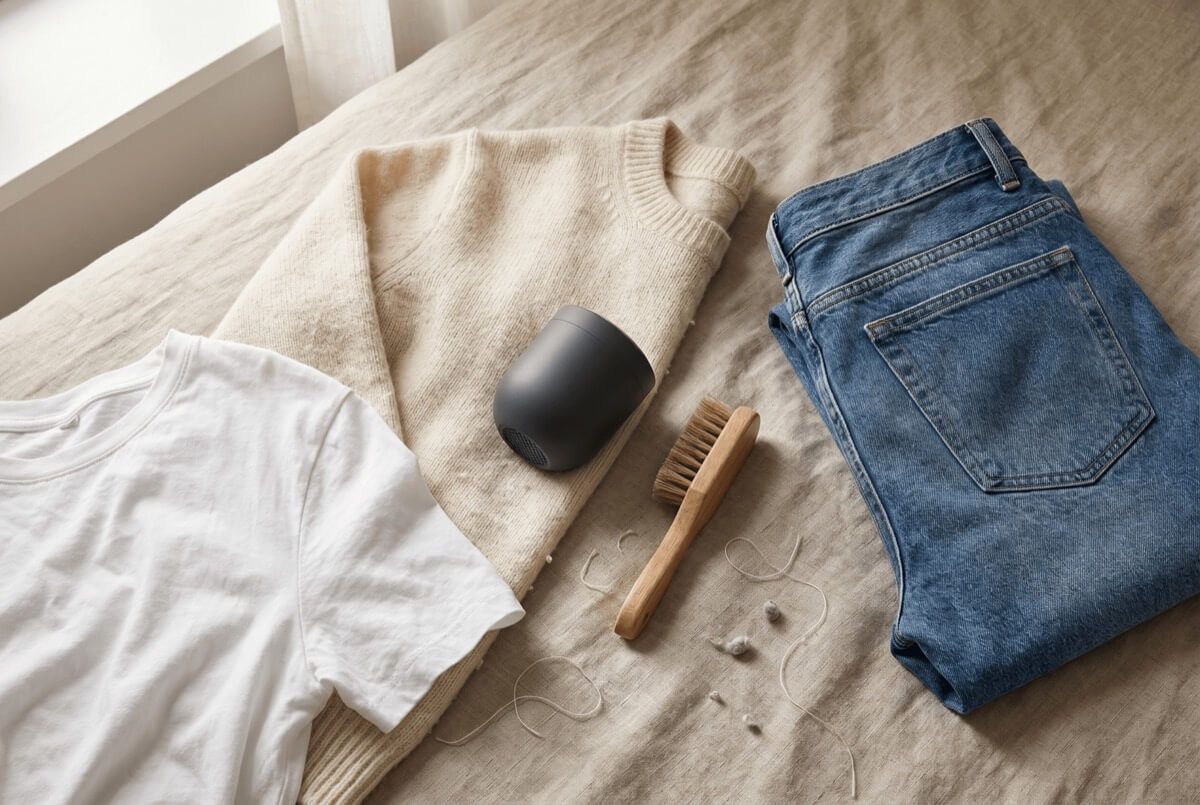
A lot of clothing gets pushed aside because it looks tired, not because it is unusable. Coats collect lint. Black basics lose their crisp look. Thrifted sweaters feel fuzzy. Dresses wrinkle in storage. None of that means the piece is finished.
This is where sustainable fashion gets practical. Instead of treating visible wear as a reason to shop, treat it as a maintenance cue. A quick brush-down, a steam over the shower rail, or a careful press can make older pieces feel like part of your wardrobe again. If you already own a garment steamer, this is the section it was made for.
Pro Tip: Pick one “wardrobe reset day” each month to brush, steam, mend, and rehang your most-worn pieces.
One small tool is worth the drawer space here.
The Handcrafted Lint Brush
Why We Love It: The rubber bristles build a light static charge as you brush, lifting lint, fuzz, and pet hair off coats and knits — no sticky paper sheets heading to the bin after every use.
Best For: Coats, blazer shoulders, dark knitwear, and thrifted pieces on their first day home.
- Sustainably harvested beechwood handle, made in Germany, per the maker
- Cleans by hand or under running water, then goes back to work
- Replaces disposable sticky rollers entirely
One habit worth stealing: brush pieces before they go into storage, not just before you wear them.
Heads Up: This lifts surface lint and fuzz — it will not shave the bobbles off a pilled jumper. That is a fabric shaver’s job — and the free version works: lay the knit flat on a hard surface and shave the bobbles off gently with a plain disposable razor or a sweater comb, slow strokes, no pressure. If pilling is your main battle, start there before you buy anything.
Ten quiet minutes and the coat looks cared for again 🌿
3. Use Easy Layers to Make Thrifted Outfits Feel More Intentional
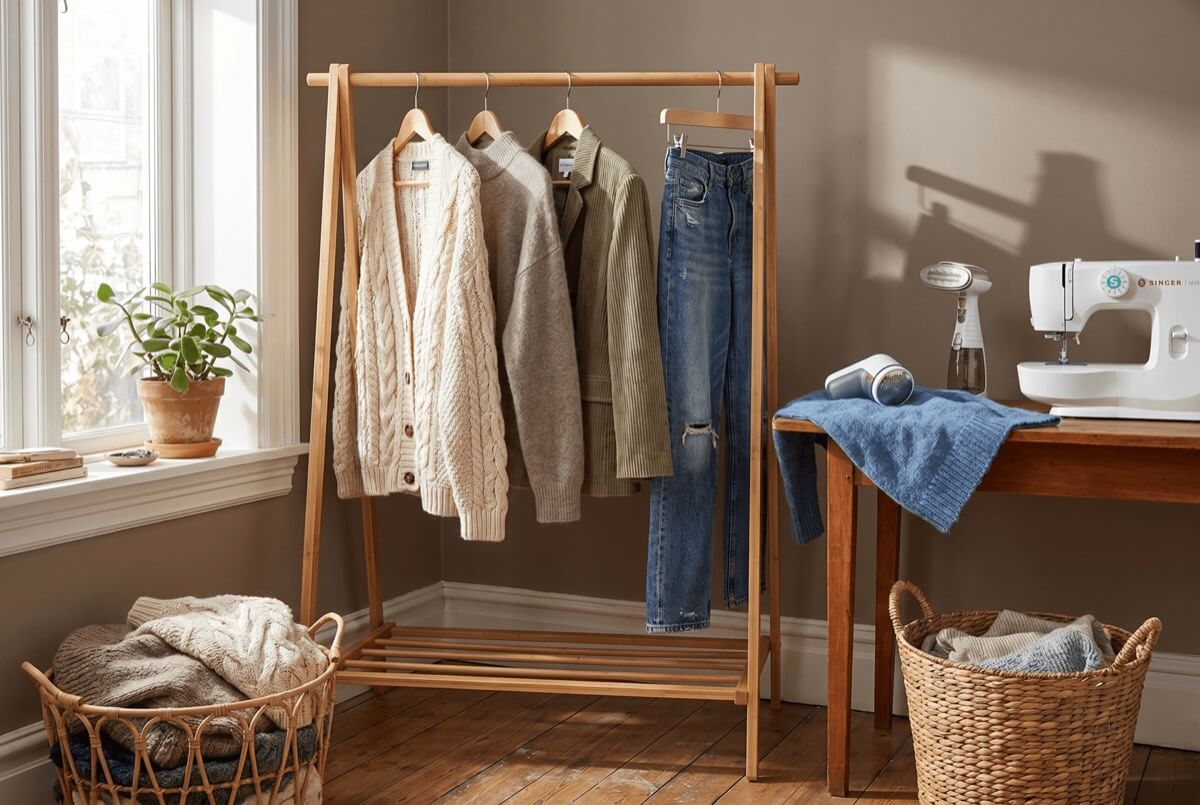
Many thrifted pieces fail in real wardrobes because they feel hard to style, not because they were bad finds. The fix is usually not another statement piece. It is a reliable layer that helps old and new items work together.
When you give secondhand pieces one reliable layer to lean on, they become easier to wear. Try these combinations:
- thrifted jeans + plain tee + cardigan
- secondhand slip dress + blazer + boots
- oversized shirt + midi skirt + structured layer
- upcycled denim + knit top + structured blazer
Pro Tip: Choose one soft layer and one polished layer. That gives you options for casual days and more dressed-up moments without needing more clothes.
And before any of that: the styling only works if the base piece was worth carrying home. Five things to check while it is still on the rail, before you spend anything:
- The armhole seam — tug it gently and see if light comes through.
- Fabric weight — feel it in your fist; flimsy stays flimsy.
- The shoulder seam — it should end where your shoulder does. That is the one fix tailors charge real money for.
- Under the arms — pilling there tells you how the fabric ages.
- The fibre label — a wool blend for the price of a polyester one is the whole point of thrifting.
For the soft layer, this is the one we would point a friend at.
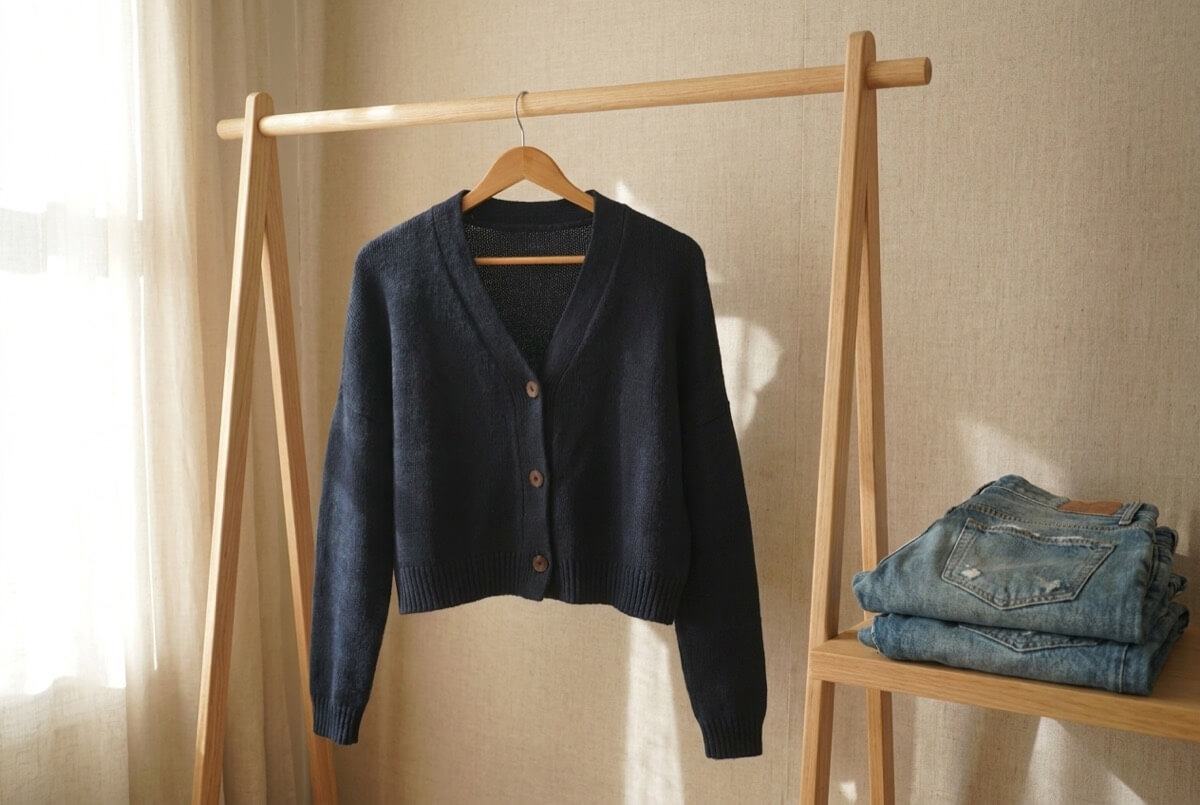
The Hand-Knitted Cotton Cardigan
Why We Love It: It is the kind of layer that quietly improves outfit repeating — and it walks the upcycling talk: the maker states each one is hand-knitted in Bali by women artisans earning fair living wages, using existing cotton yarns, finished with coconut-shell buttons.
Best For: Everyday layering over thrifted denim and dresses, transitional weather, and outfits built from what you already own.
- Knitted from existing cotton yarns, certified Oeko-Tex Standard 100
- Coconut-shell buttons instead of plastic
- Dropped shoulder, relaxed fit — designed for layering
- Every size from XXS to XXL was in stock when we checked
Wear it buttoned as a top sometimes — one layer, twice the wardrobe.
Heads Up: The cut is cropped and slightly boxy — the maker says so themselves — which is wonderful over high-waisted pieces and less flattering over long untucked tops. And the maker’s care instruction is blunt: hand wash or dry clean — no machine.
4. Turn Clothing Care Into Part of Your Zero Waste Fashion Routine
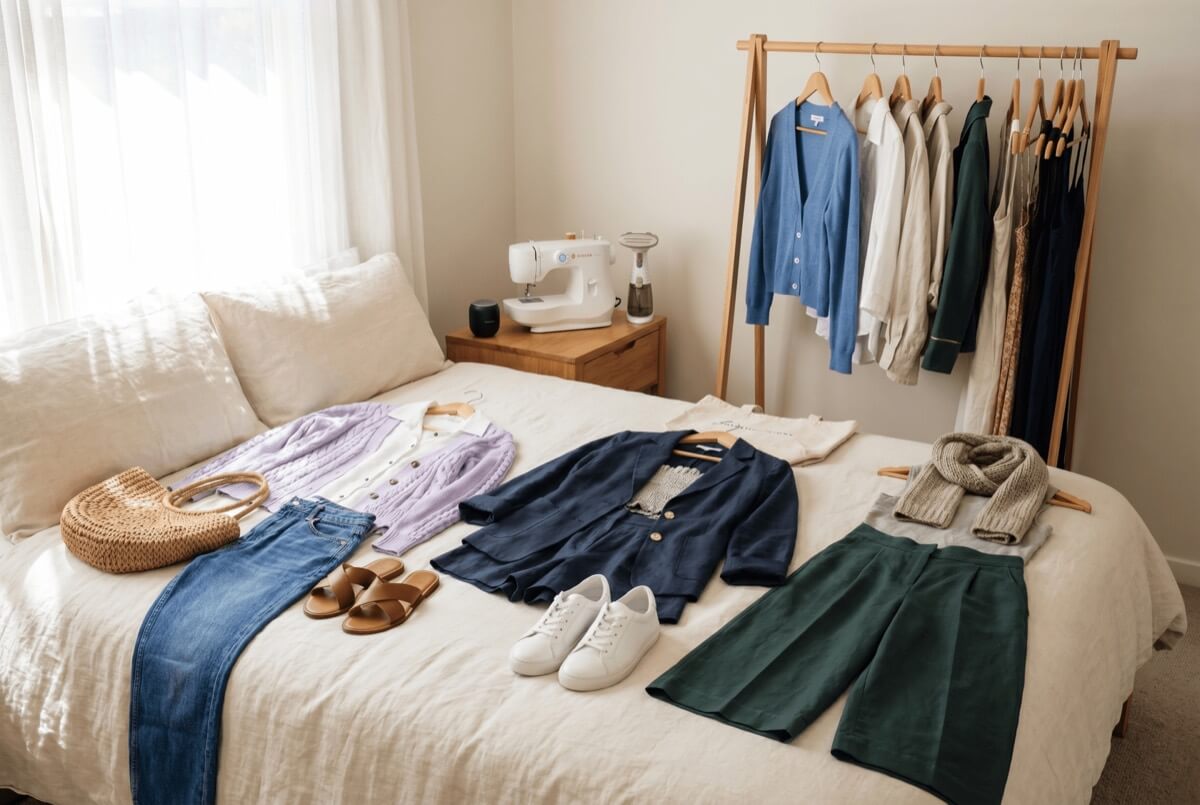
Zero waste fashion is not only about what you buy. It is also about how you wash, dry, store, and rotate the clothes you already have. Garments last longer when they are treated more gently, especially knitwear, linen, delicates, and secondhand pieces with some age on them.
Air drying is still the gentlest habit of all — a rail, a hanger on the shower rod, or a line outside costs nothing and preserves shape and elasticity. For the loads that do go through the machine, two small changes do most of the good.
The Microfibre Washing Bag
Why We Love It: Synthetic fabrics shed tiny plastic fibres in every wash, and those fibres head straight for rivers and oceans. This bag catches them in the machine — you wash your synthetics inside it, then lift the collected fibres out and bin them. It also reduces shedding in the first place, so the garment itself lasts longer.
Best For: Fleece, sports gear, recycled-polyester pieces, and any thrifted synthetics in your rotation.
- Filters the microfibres that break off in the wash, per the maker
- Prevents fibres breaking in the first place — by up to 86%, per the maker — which protects the garment itself
- A visible weekly reminder of what your clothes are made of
Heads Up: It only helps the loads that contain synthetics — your cottons and linens do not need it. It is a habit, not a gadget: you have to actually empty the caught fibres into the bin, not down the drain, for it to do any good. And the seller notes it ships to US customers only.
The Wool Dryer Balls
Why We Love It: For the loads that do tumble, these replace single-use dryer sheets and liquid softener outright. Made from organic wool, per the seller, they soften and fluff by simply rubbing against the laundry, and they cut down static and wrinkles while they are at it.
Best For: Towels, bedding, and the everyday basics you machine-dry anyway.
- 100% New Zealand wool, unscented and plastic-free
- Replaces dryer sheets and fabric softener — both usually carry plastics
- Rated by the seller for 1,000+ loads each, with dry time cut by up to 40%
Heads Up: They are wool, so they are not the pick for a strictly animal-free home. And if you air dry nearly everything — which is even better for your clothes — you may simply not need them.
5. Build Repeatable Outfit Formulas Around One Strong Piece
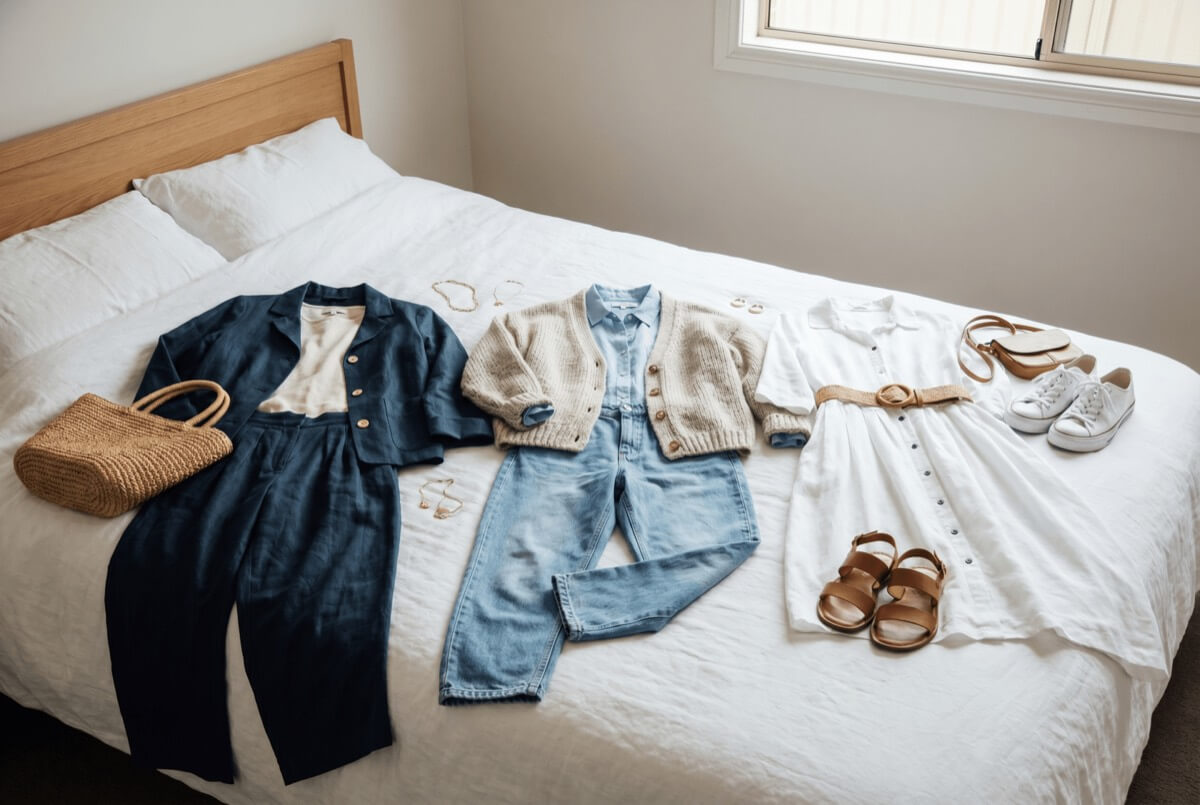
A sustainable wardrobe does not need to be built on endless basics. Sometimes one beautiful, rewearable piece gives your closet more direction than five trend-driven items ever could. The key is choosing something you can style across seasons, not just admire on a hanger.
Here is the test in practice. A midi dress with sandals is a summer outfit. The same dress under a cardigan is a workday. Over a roll-neck with boots, it is deep winter. Nothing new was bought between those three sentences — that is what a wardrobe anchor does.
Pro Tip: Before buying a new fashion piece, list three outfits using clothes you already own. If you cannot do that easily, it may not be the right anchor.
The Eco Midi Dress
Why We Love It: A well-cut midi dress is the easiest outfit formula there is — and this one has a genuinely clean story: cut from 100% Lyocell, sewn with GOTS-certified organic cotton thread, and finished with hemp buttons, which the maker says makes it completely plastic free.
Best For: Readers who want one premium piece that can carry casual, dressed-up, and layered looks across the year.
- 100% Lyocell shell with a pleated skirt that moves
- GOTS-certified organic cotton thread, hemp buttons, made in Romania
- Side pockets — a small thing that changes everything
- Layers under cardigans in autumn, stands alone in summer
Style it with the cardigan above for soft everyday wear, or the blazer below when the day needs structure. One dress, two completely different weeks.
Heads Up: This is an investment piece — it only makes sense if it replaces several trend buys, not adds to them. Lyocell also asks for a very delicate machine wash. And when we checked on 12 August, sizes XS to L were in stock but XL was not.
One dress, a full week of different outfits 🌿
6. Choose One Investment Layer That Can Transform Simple Outfits
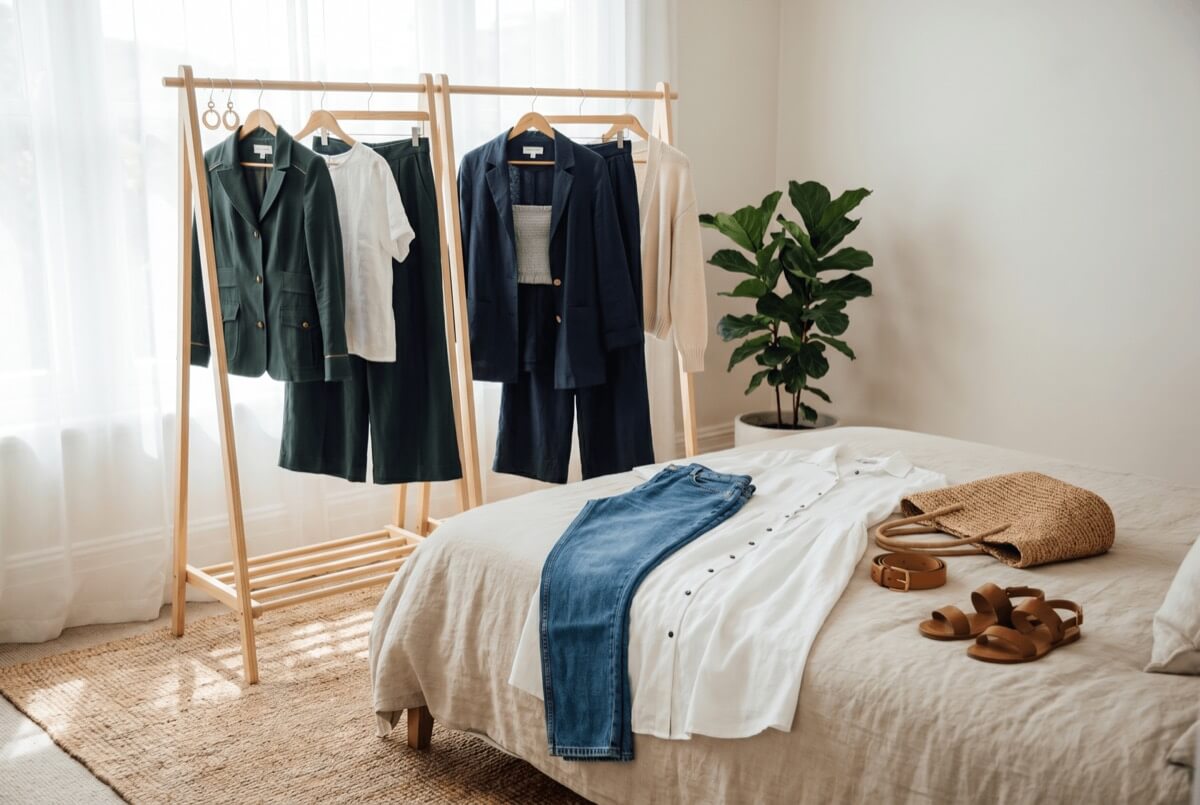
If you enjoy upcycled wardrobe ideas but also want a more refined finish, one structured outer layer can bridge the gap. This is especially useful when your closet includes thrifted basics, repaired denim, and practical everyday staples.
Jeans and a plain tee is a nothing outfit. Jeans, a plain tee, and a blazer is a decision. The layer does the talking — which is exactly why the one you invest in has to work with the most ordinary clothes you own, not the special ones.
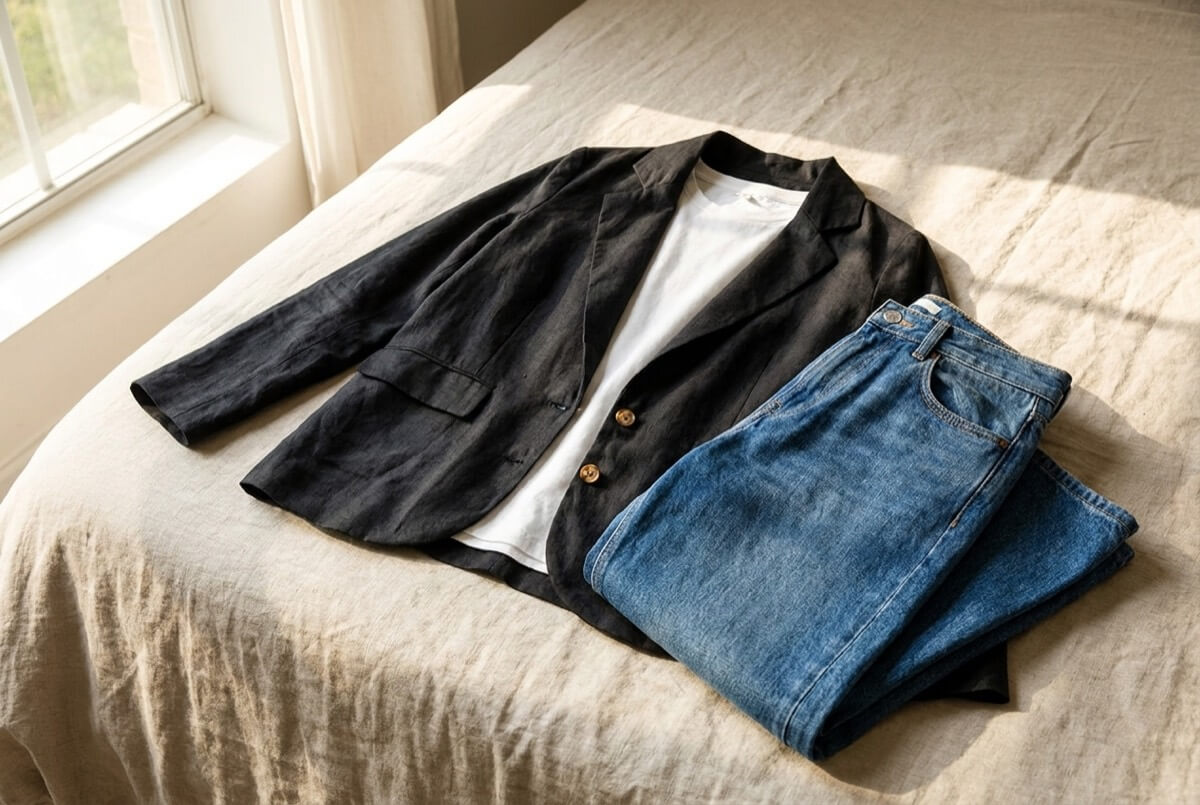
The Hemp Blazer
Why We Love It: A classic notched-collar blazer made from 100% hemp that works as hard at a meeting as it does over thrifted jeans. And a detail worth celebrating: the size run goes from XS all the way to 3XL.
Best For: The polished layer in your thrift-heavy rotation — the piece that makes secondhand basics read styled, not random.
- 100% hemp, per the maker
- Notched collar, front pockets, regular fit
- Sizes run XS to 3XL — every one in stock when we checked
Heads Up: Hemp creases the way linen does — lived-in is part of the look, and if that bothers you, this fabric will annoy you by lunchtime.
7. Use Upcycled Denim and Basics as Your Everyday Creative Playground
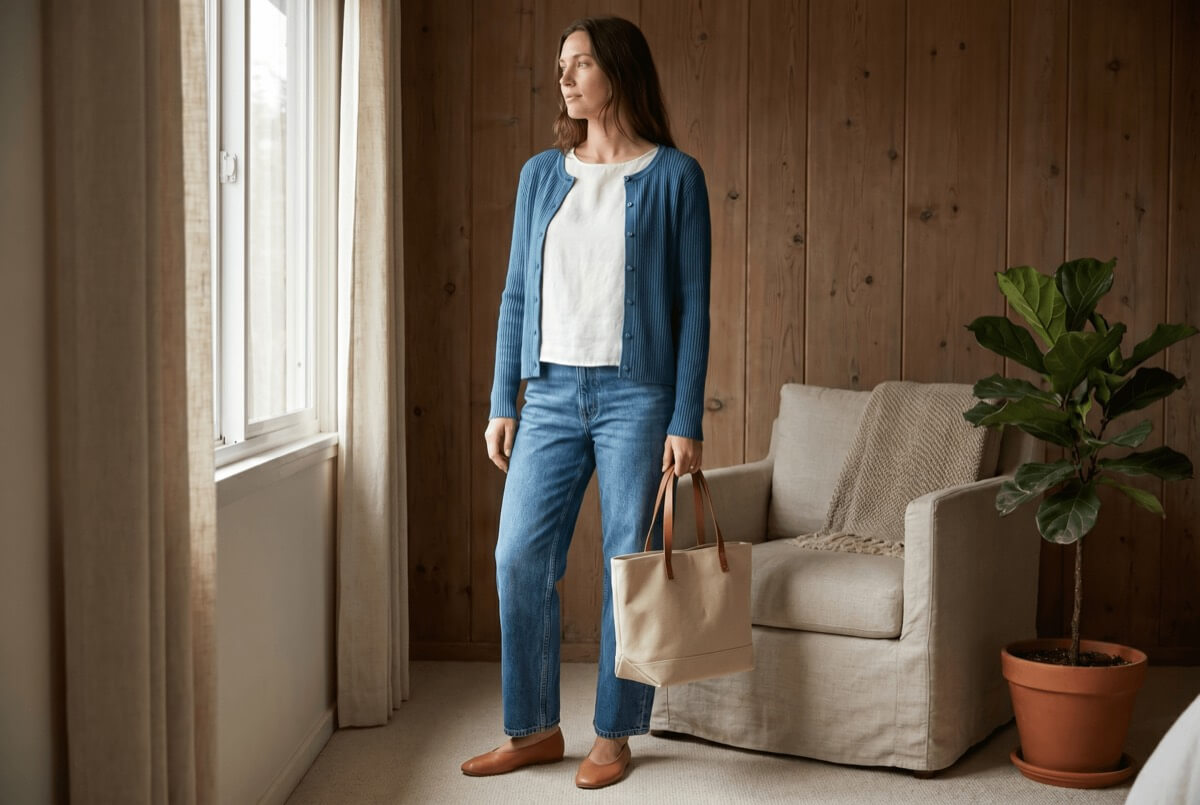
If you are wondering how to upcycle clothes without making your wardrobe feel costume-like, start with denim and basics. These pieces are forgiving, practical, and easy to rewear — and the four moves below cover most of what the before-and-after videos are actually doing:
- Shorts from old jeans: cut a full 5 cm below where you want them to end, then roll — cutting at the final length is how they end up homemade-short.
- Patches: inside the leg for a repair that disappears, outside for one that is the point. Contrast thread says deliberate; matching thread says mended.
- Cuffs: a double cuff holds all day; a single one drops by lunchtime.
- Shortening with the original hem: cut above the factory hem, then sew that edge back on — the jeans keep their bought look at the new length.
- Distressing: knee and pocket edge read worn-in. Anywhere else reads damaged. Stop earlier than you think.
A real gap can open at the feet, or over everything else. These two earn their place: one for what it is made of, one for what it lets you do with the rest of your wardrobe.
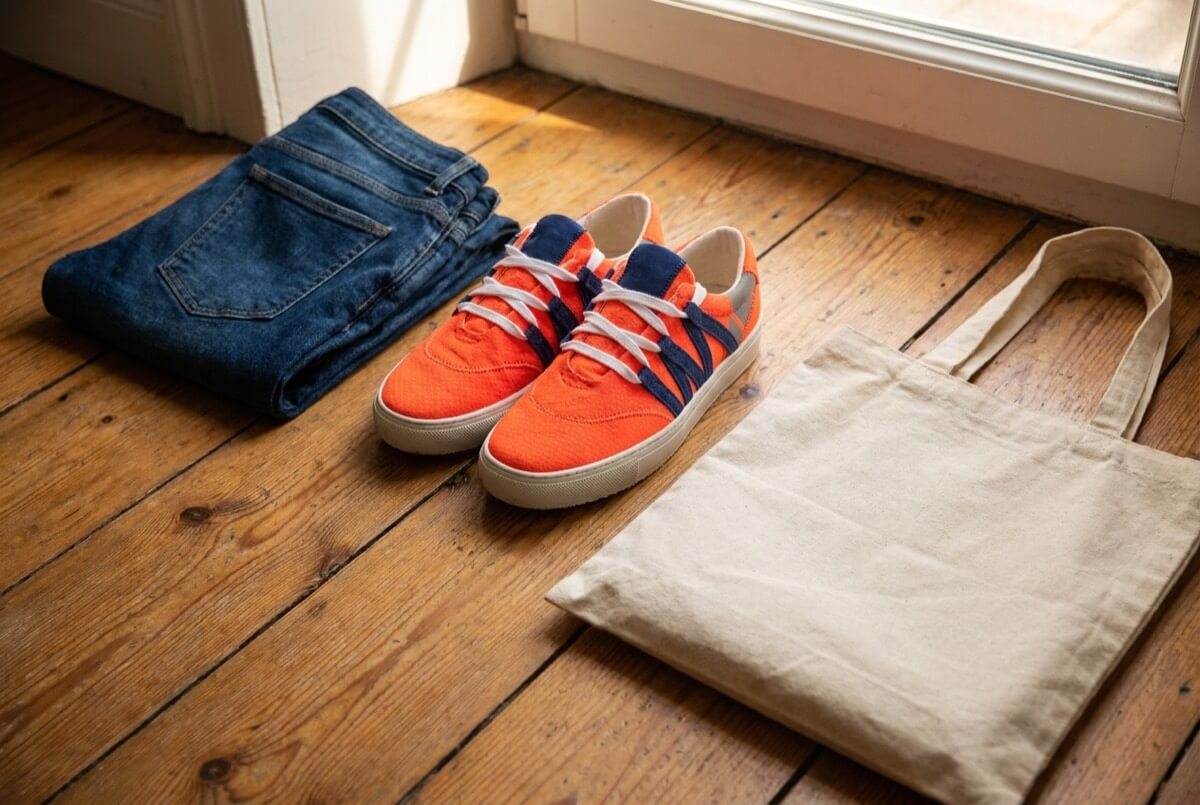
The Upcycled Sneakers
Why We Love It: These are upcycling you can point at: made in Portugal from upcycled workwear textiles and white tablecloths, per the maker. The orange-and-blue colourway keeps the fabric’s first life visible — a conversation starter that fights textile waste on foot.
Best For: Finishing thrifted and restyled outfits with something nobody else on the street is wearing.
- Uppers from upcycled workwear textiles and tablecloths
- Made in Portugal
- Every size from EU 35 to 47 was in stock when we checked
Heads Up: Sizing is European — check a EU-to-US conversion chart before ordering, because a wrong-size return costs more shipping than the planet deserves. And the neon orange is genuinely bold — if your wardrobe lives in neutrals, this is not your pair.
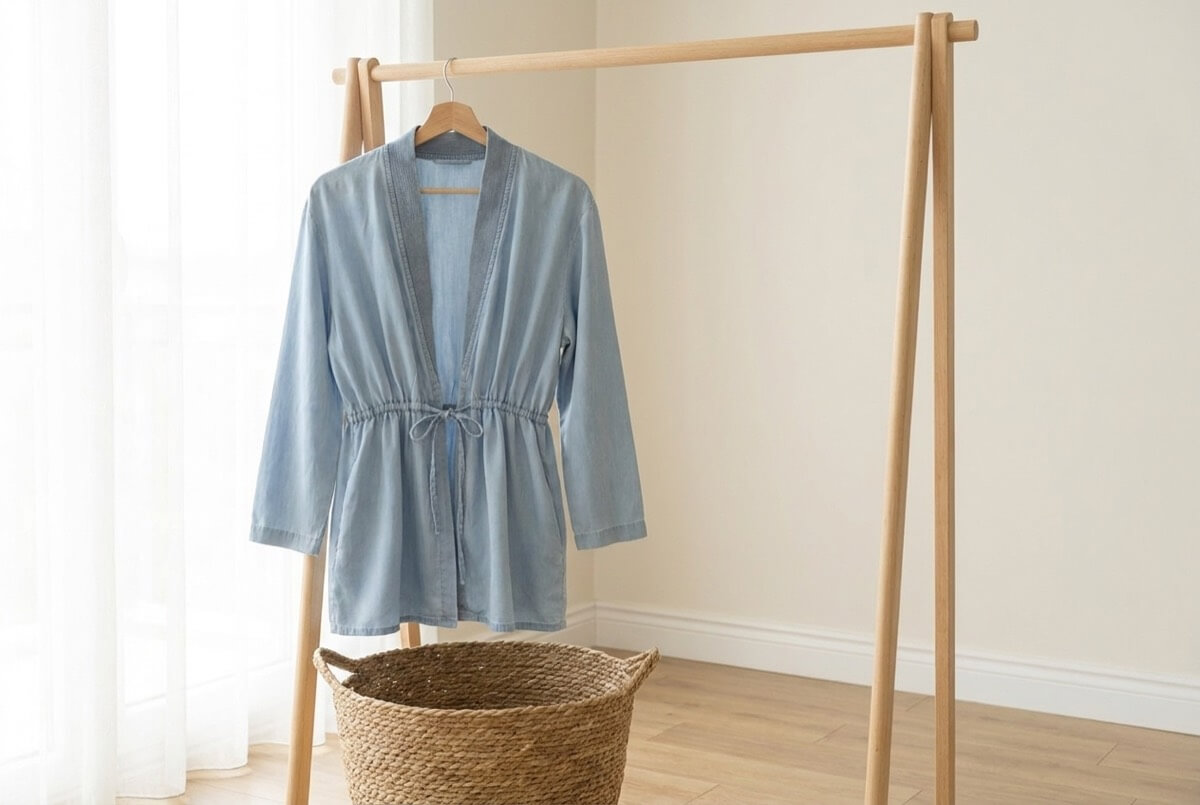
The Everyday Denim Jacket
Why We Love It: A denim layer with an actual waist — the drawstring lets you cinch it for structure or wear it open and flowy, which is exactly the kind of restyling flexibility this whole post is about. One jacket, several silhouettes.
Best For: Throwing over dresses, tees, and the outfit formulas from section 5 — the denim piece that plays with everything.
- Drawstring closure to change the shape, not just the size
- Cotton rib collar, regular fit
- Combined sizes run from XS/S up to 3XL/4XL — all four were in stock when we checked
Heads Up: The maker does not publish this jacket’s full fabric composition on its page — only the cotton collar is specified — so we will not invent a fibre story for it. And the combined sizing (XS/S, M/L) means the fit is intentionally loose rather than tailored.
That repair-first filter from the top of this post is what makes zero waste fashion sustainable in practice. It keeps your wardrobe creative, personal, and much less dependent on constant shopping.
Product Comparison Table
| Product | Best For | Type | The honest story |
|---|---|---|---|
| Handcrafted Lint Brush | Reviving coats and knits | Care tool | Beechwood and rubber, replaces sticky rollers |
| Hand-Knitted Cotton Cardigan | Easy layering | Soft layer | Hand-knitted from existing cotton yarns, coconut buttons |
| Microfibre Washing Bag | Washing synthetics | Care tool | Catches microplastic fibres in the machine |
| Wool Dryer Balls | Gentler machine drying | Care tool | Organic wool, replaces dryer sheets |
| Eco Midi Dress | Repeatable outfit formulas | Anchor dress | 100% Lyocell, GOTS thread, hemp buttons |
| Hemp Blazer | Polished thrifted styling | Polished layer | 100% hemp, sizes XS to 3XL |
| Upcycled Sneakers | Finishing restyled outfits | Statement piece | Made from upcycled workwear and tablecloths |
| Everyday Denim Jacket | Flexible denim layering | Denim layer | Drawstring shape-shifter, honest about its unlisted fibres |
FAQs
What is upcycled fashion?
Upcycled fashion means improving or transforming existing clothing so it can be worn again in a fresh way. That can include repairs, alterations, patching, dyeing, reshaping, or creative restyling.
How do I start upcycling clothes as a beginner?
Start with easy wins like hemming trousers, fixing loose seams, adding patches to denim, or turning oversized shirts into better-fitting layers. Simple clothing care habits also count because they help older pieces stay wearable.
Is a sewing machine necessary for upcycled clothing?
No. A hand needle and thread cover hems, buttons, small seam fixes, and patches — which is most of what a beginner ever needs. A machine only starts to earn its space if you find yourself doing regular alterations or bigger projects.
How can I make thrifted outfits look more polished?
Focus on fit, steaming, brushing, and layering. A cardigan or blazer can bring structure to secondhand basics, while simple care habits help the clothes look cleaner and more intentional.
What are the easiest zero waste fashion habits to start with?
Wear what you own more often, repair small issues early, air dry delicate pieces, refresh garments before replacing them, and shop secondhand or selectively when a real gap appears.
How do I know whether a sustainable fashion piece is worth the investment?
Ask whether it works with at least three outfits you already wear and whether it fills a real wardrobe need. The best investment pieces support repeat wear instead of sitting untouched.
Is it worth paying for one sustainable piece when thrifting is cheaper?
Sometimes. Thrifting wins on price and waste, so it should carry most of the wardrobe. A made-to-last piece earns its place only where secondhand keeps failing you — a fit you can never find on the rail, or a layer you wear so often it needs to survive years of it. Buy new rarely, deliberately, and to fill a gap thrifting has already proven it cannot.
Conclusion
Building a zero-waste wardrobe does not require a dramatic closet purge or a full sustainable fashion overhaul. It usually begins with smaller, more realistic choices: mending one item, refreshing another, learning how to restyle old clothes, and investing in pieces that help you rewear what you already have.
The goal is not perfection. It is a wardrobe that gets worn, enjoyed, repaired, and repeated. If you want one small way to start tonight, the lint brush is the ten-minute version of everything this post argues. And if you want one piece to buy first, the cardigan is the cheapest way into the layering habit and the easiest thing to wear with what you already own.
And if the upcycling itch is still there when the wardrobe is sorted, our upcycled tote bag ideas are a good next project.