Somewhere in your wardrobe there is a piece you have worn a hundred times. It has softened at the seams, it goes with everything, and you would notice immediately if it disappeared. That piece is the whole argument for zero-waste fashion, and you already own it.
The eight finds below are chosen the same way. Two of them are cut from cloth that already existed — upcycled velvet, and wool left on the roll when a production run ended. One is spun from recycled fibre. The other five are new cloth, and they earn their place differently: by being made well enough, in shapes plain enough, that you will still be wearing them in five years. Wearing something out is its own kind of zero waste. Every piece was checked in stock on the seller’s own site at the time of writing.
“The bin is not the end of the story. It is just the part most clothes never get past.”
Eight zero-waste fashion finds — reclaimed, recycled, or simply built to be worn out rather than thrown out.
🌿 Quick Picks: Six to Start With
Short on time? Jump straight to the pieces:
The Denim-Blue Tencel Dress ↗
The Upcycled Velvet Skirt ↗
The Recycled Midi Skirt ↗
The Roll-End Wool Dress ↗
The Long Linen Dress ↗
See the full 8-piece checklist ↓
Where Zero-Waste Fashion Actually Comes From
There are three honest routes to a wardrobe that does not cost the earth, and they are worth knowing apart. Artisan makers cut small runs by hand, often from fabric nobody else wanted. Certified ethical brands work at a larger scale but publish what they use and where it is made. Quality resale keeps clothes that already exist in circulation, which is the lowest-impact route of all.
The pieces in this guide come from the first two, because those are the ones we can point you to reliably — resale stock is one-of-a-kind by nature, so a link to it tends to be dead within a week. Take the resale route yourself, locally, and you will do even better than anything on this page. That is not false modesty; it is just how the maths works.
Here are the eight, in the order we would actually build them up.
1. The Linen Wrap Skirt That Solves Getting Dressed
A wrap skirt solves the problem most mornings actually have, which is not a shortage of clothes but a shortage of decisions. There is no zip to fight, no fixed waistband to negotiate with after lunch. You wrap it, and the outfit is finished.
Linen earns its place here for the same reason it has been in wardrobes for four thousand years. It breathes in heat, softens with every wash instead of degrading, and looks better slightly crumpled than most fabrics look pressed.
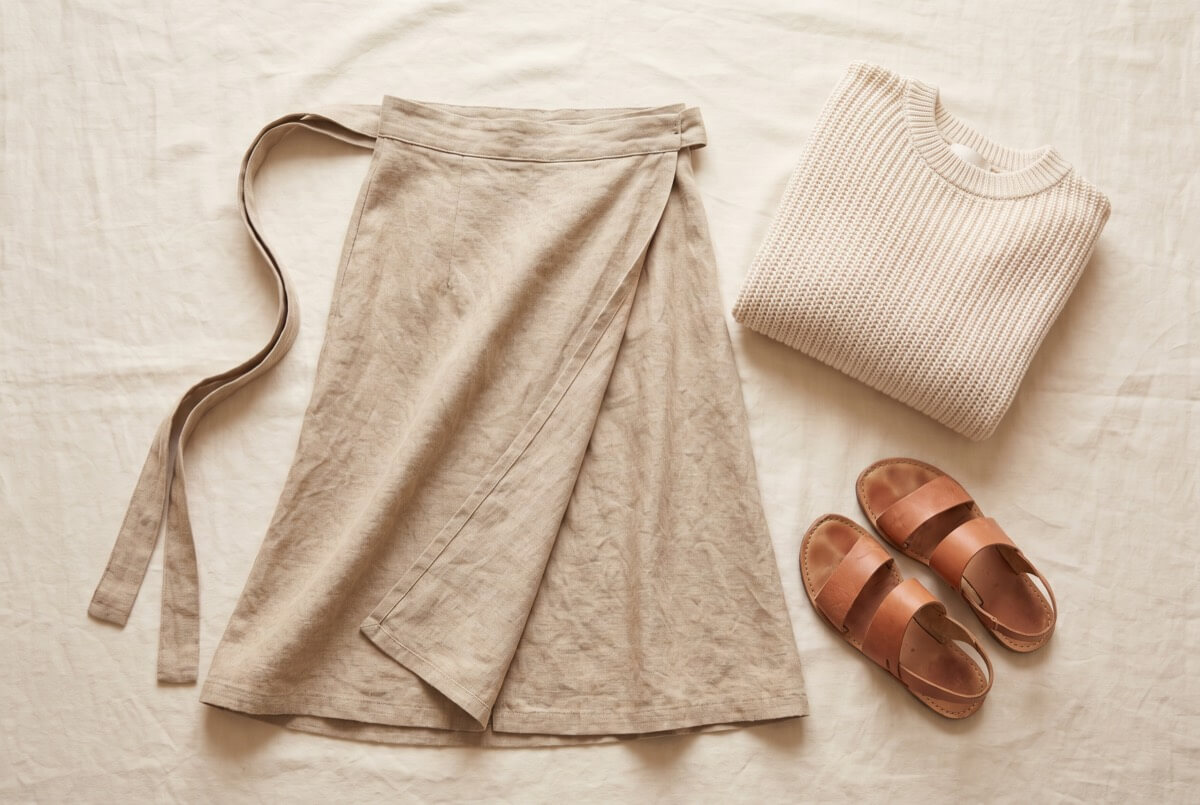
Linen Wrap Skirt — Stone-Washed
Why We Love It: It is the rare piece that works for a picnic and a wedding without changing anything but the shoes.
Best For: Anyone who wants one bottom half that covers most of the summer.
- Made from 100% certified European linen, stone washed for softness
- A wrap closure, so the fit moves with you rather than against you
- Washes cold on a gentle cycle and dries naturally — no dryer
Pro Tip: Wrap it slightly off-centre rather than dead front. The fabric falls better and the seam stops drawing a line down the middle of you.
Heads Up: Two honest limits, and the second one is odd. The maker publishes thirteen colours, but this listing does not let you choose one — check which colour you are actually getting before you order. And the sizing is confusing: the listing sells six size labels, XS through XXL, while the maker’s own sizing note describes only two bands (roughly US 2–8 and US 10–14) and never mentions XXL at all. Message the seller before ordering if you are at either end of that range.
Wrap it once and stop thinking about it 🌿
2. The Upcycled Velvet Skirt for Warm Neutrals
Camel is the colour that quietly does the most work in a wardrobe. It sits beside cream, rust, indigo and black without arguing with any of them.
What makes this one belong in a zero-waste guide is the fabric itself: the maker states it is upcycled, meaning the cloth was already in the world before this skirt was cut from it. That is the whole idea, executed on a piece you would buy anyway.
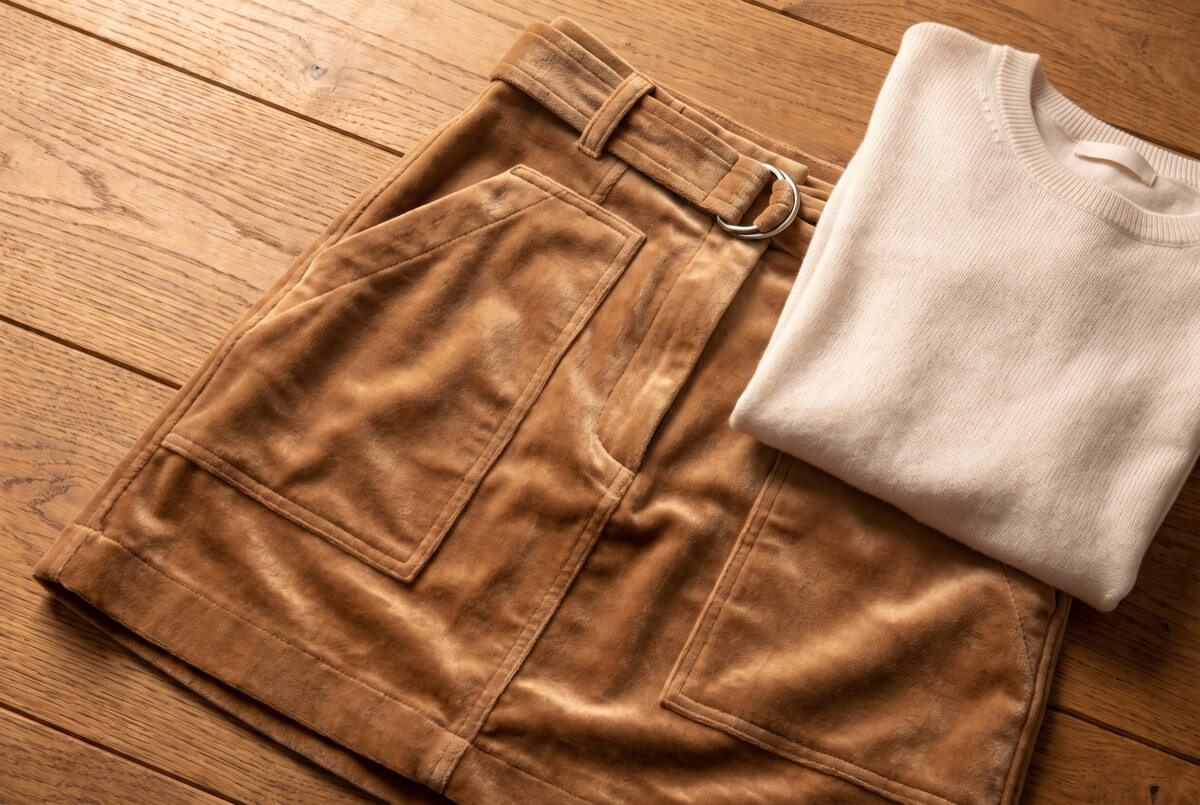
Camel Velvet Belted Skirt — High-Waisted, Pocketed
Why We Love It: Cargo-style pockets on a pencil silhouette is a genuinely useful contradiction.
Best For: Autumn and winter dressing, and anyone who resents skirts without pockets.
- Cotton-stretch velvet the maker describes as sustainably upcycled fabric
- Front and back pockets, plus a brushed metal belt buckle
- High-waisted pencil cut, made to be tucked into
- Machine washable, which velvet frequently is not
Heads Up: It is short — the maker’s own size table runs from about 44.6cm to 46.7cm depending on size, so above the knee on most people. The published size run also stops at L, so it is not a wide range.
Fabric with a previous life, cut into something you will wear on repeat
3. The Denim-Blue Midi Dress You Can Dress Up or Down
Denim blue is a neutral pretending to be a colour. It goes with sandals in July and boots in October, and it hides a surprising amount of everyday life.
This one is worth being precise about, because the name is misleading in a way we would rather flag than let you discover at the door. It is not denim. The maker states it is 100% Tencel, a wood-pulp fibre. It reads as denim from across a room, and it is a different thing entirely up close.
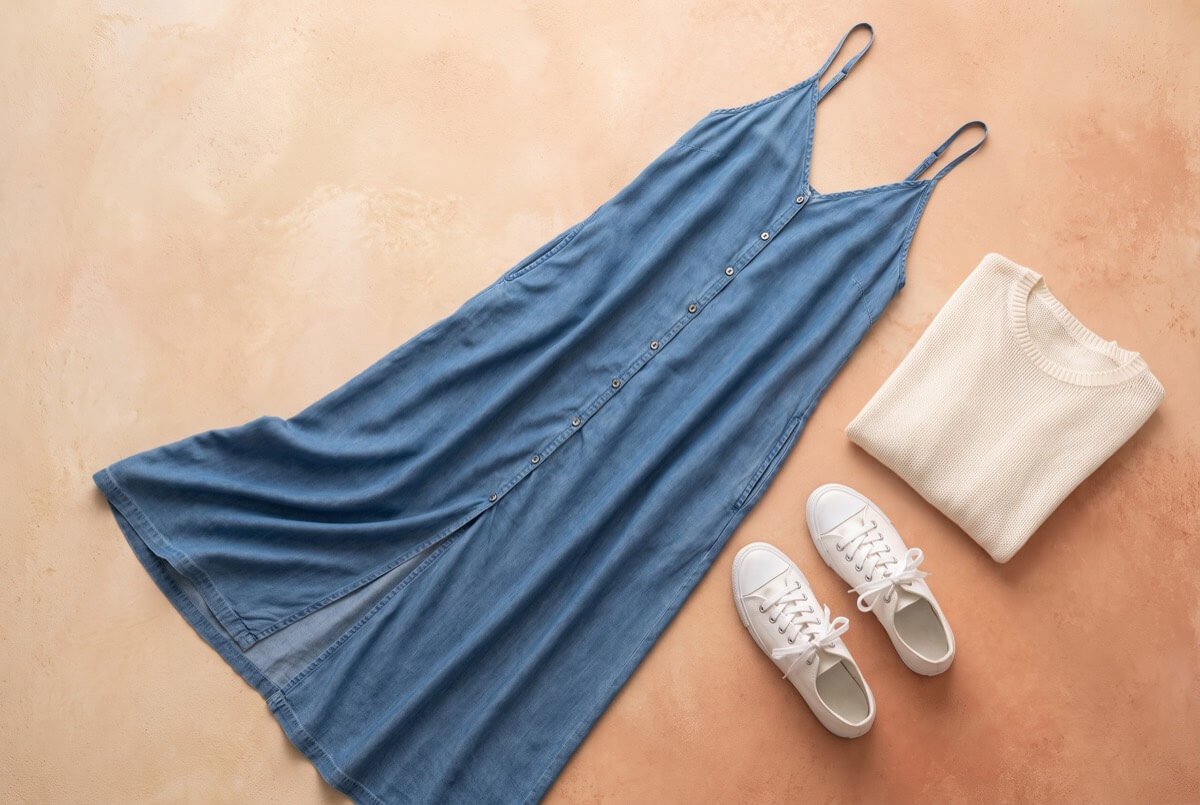
Denim-Blue Midi Slip Dress — Tencel, Pocketed
Why We Love It: Heels and a belt make it dinner; sneakers and a top knot make it a Saturday.
Best For: Anyone who wants the denim look without the weight of actual denim.
- Made from 100% Tencel in a relaxed fit
- Adjustable straps, with buttons at the front
- Pockets on both sides
- Falls to roughly 46 inches on a size M
Pro Tip: Steam it rather than iron it — hang it in the bathroom while you shower. It is how Tencel is usually best treated, and it saves unpacking an iron.
Heads Up: Despite the product name, there is no denim and nothing upcycled in it — it is a new-fibre dress, and we would rather say so than let the word denim do work it has not earned. Not every size was in stock when we checked, so confirm yours before you commit.
The denim look, in a fabric that moves
The most sustainable garment is the one you already wear the most.
Everything on this page is chosen against that test. If a piece will not survive fifty wears in your actual life, it does not belong in a zero-waste wardrobe, however good its credentials look on paper. Our capsule wardrobe guide works through the same idea across a whole closet.
4. The One Piece That Becomes Five
There is a particular kind of zero-waste win that has nothing to do with fabric: buying one thing instead of five. A convertible piece is the cleanest version of that idea.
Worn one way it is a dress. Tied another way it is a skirt, a top, a beach cover, or a hooded layer. The maker counts five configurations; in practice you will settle on two or three and use those constantly.
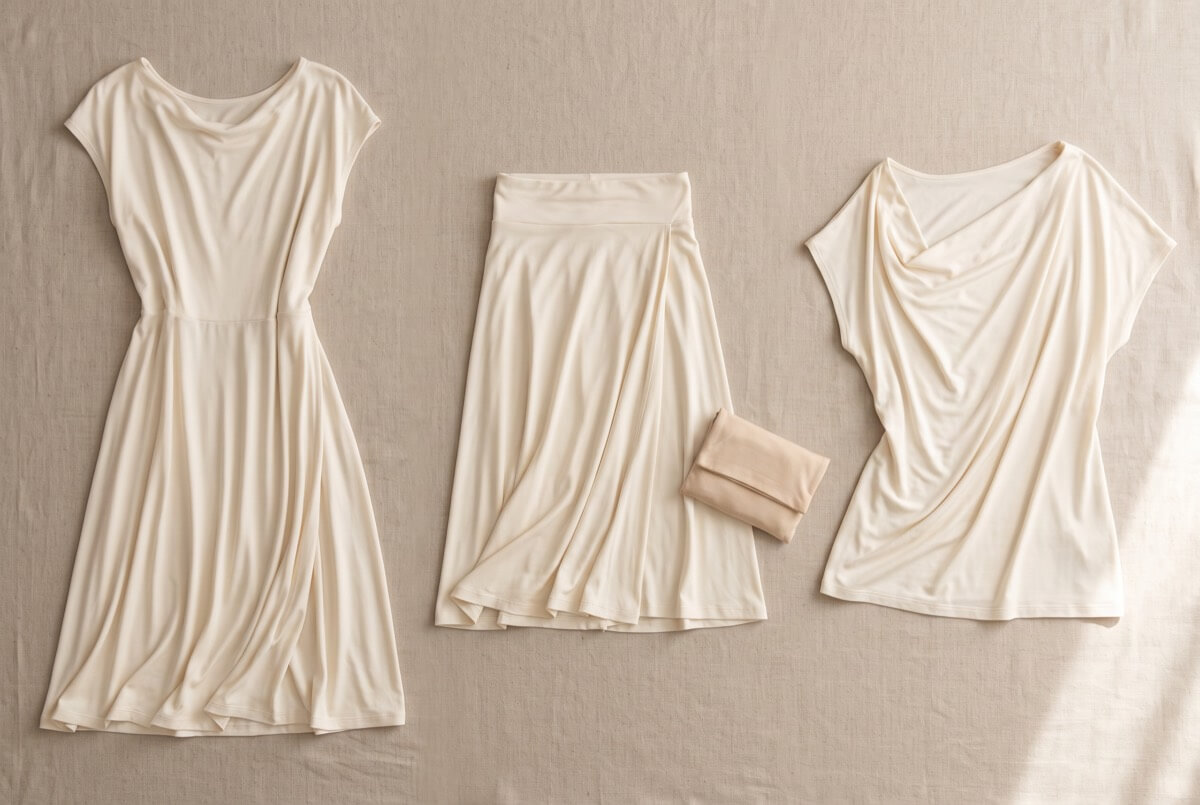
Convertible 5-in-1 Dress — Micromodal Jersey
Why We Love It: Five garments’ worth of use out of one purchase is the whole zero-waste argument in a single piece.
Best For: Travel, holidays, and anyone tired of packing an outfit per day.
- 95% certified Lenzing micromodal with 5% spandex
- Wearable as a dress, top, skirt, beach cover or hooded layer
- Designed in Brooklyn and made ethically in Los Angeles — the maker’s own words, and the only piece here whose own description says how it is made, not just where
Heads Up: It is genuinely one size only. That works beautifully for some bodies and not at all for others, and there is no size chart to fall back on — this is the one piece here we would call a gamble if you are between sizes or tall.
One piece, five ways, one purchase
5. The Roll-End Wool Dress Made From Leftovers
When a mill finishes a production run there is always fabric left on the roll — not enough for another order, too much to throw away. Most of it is written off. Roll-end production exists to cut garments from exactly that surplus, and it is one of the purest zero-waste ideas in clothing.
It also explains why this dress exists in a run of thirty per colour and then stops. There is no more fabric. That is a feature of the model rather than a marketing device.
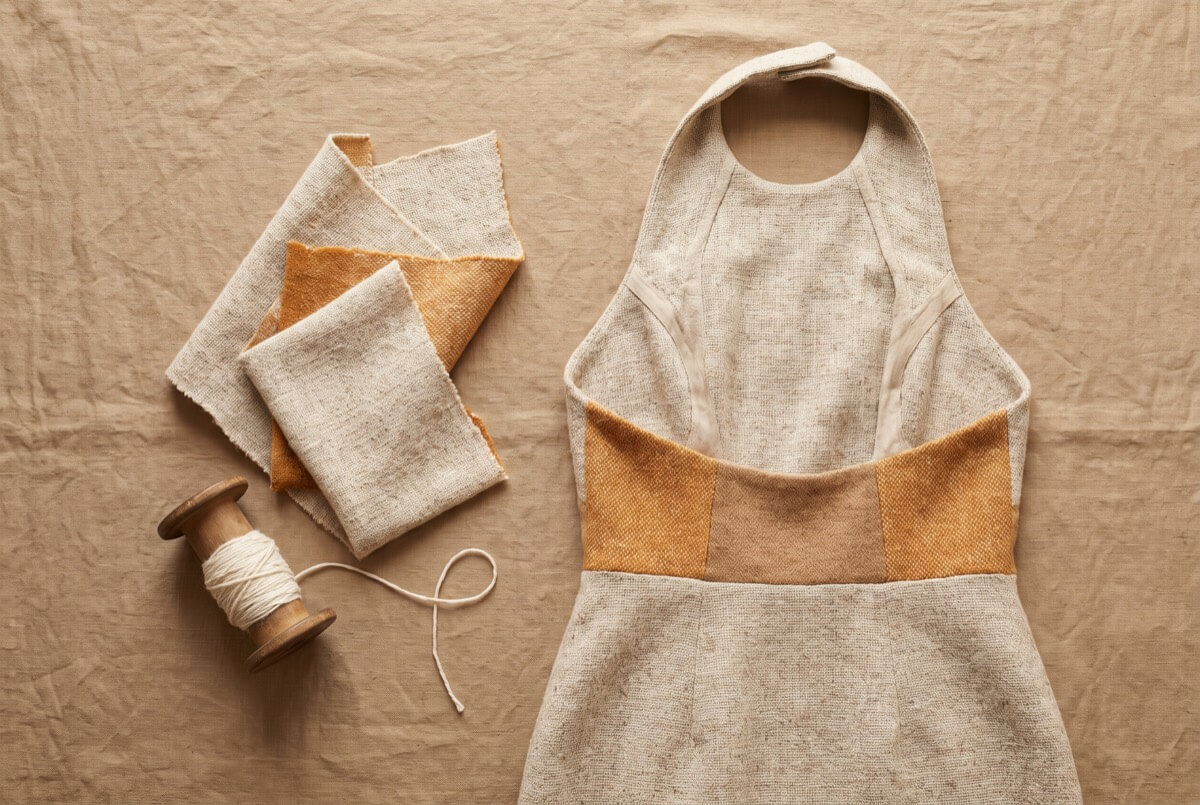
Roll-End Wool Halter Dress — Open Back
Why We Love It: This is mill surplus — cloth that never became a garment at all, and would most likely have been written off rather than resold.
Best For: Evenings, weddings, and anyone who wants a statement back.
- Cut from roll-end wool blend — 72% wool, 28% polyester
- Halter neck with a soft high cowl and a completely open back
- Contrast panels through the waist
- Made in England, in a limited run of 30 per colourway
Pro Tip: An open back rules out an ordinary bra, so plan that before the occasion rather than an hour before it.
Heads Up: Dry clean only, which is a real running cost and a real environmental one. The size run was short when we checked, so confirm yours is there before you plan an outfit around it. And at 28% polyester, this is a blend rather than a pure natural fibre.
Fabric that would have been written off, worn instead 🌿
6. The Recycled Midi Skirt for Everyday Wear
Not every sustainable choice is a natural fibre. Recycled polyester takes plastic that already exists — bottles, offcuts, old textiles — and spins it back into cloth instead of leaving it to outlast everyone who ever handled it.
The trade-off is honest and worth stating: recycled polyester still sheds microfibres in the wash. It is a better answer than virgin polyester, not a perfect one, and a light brown midi skirt you wear weekly for years is where that trade-off makes the most sense.
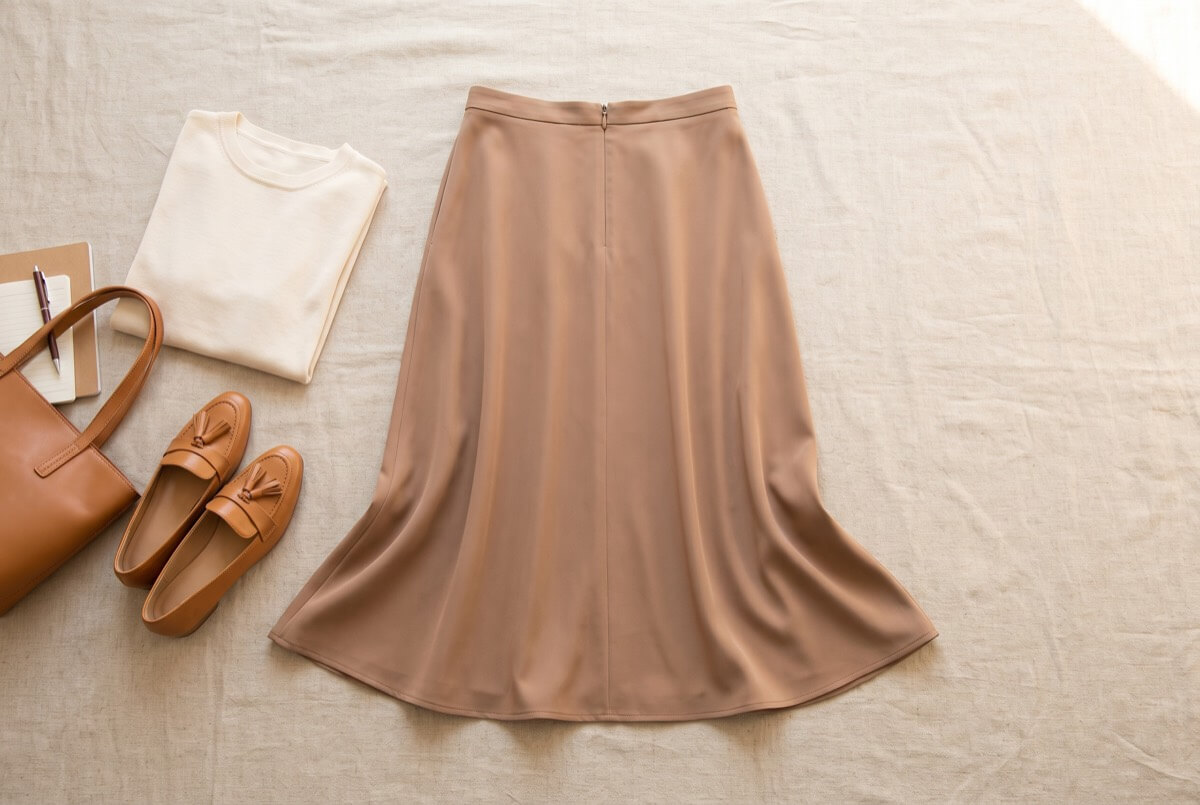
Light Brown Midi Skirt — Recycled Fibre
Why We Love It: A warm neutral midi is the least dramatic and most useful thing you can add to a wardrobe.
Best For: Office days and anything that needs to look tidy without effort.
- 95% recycled polyester with 5% spandex
- Midi length with a back zip
- Light brown, which sits with almost every warm neutral
Heads Up: Three things worth knowing. It is sold as part of a set, so the matching top is a separate purchase — the skirt alone is what is linked here. The size run was short when we checked, with nothing above M available. And recycled or not, a synthetic sheds in the wash; a filter bag is a sensible companion buy.
Plastic that already existed, turned into something you will actually wear
Patchwork: The One You Have to Make Yourself
Patchwork is the oldest zero-waste technique there is, and it is the one piece of this guide we cannot send you to buy. We looked. Nothing among the makers we work with sells a patchwork skirt we would put our name to, and rather than point you at something that only half fits the description, here is how the piece actually gets made.
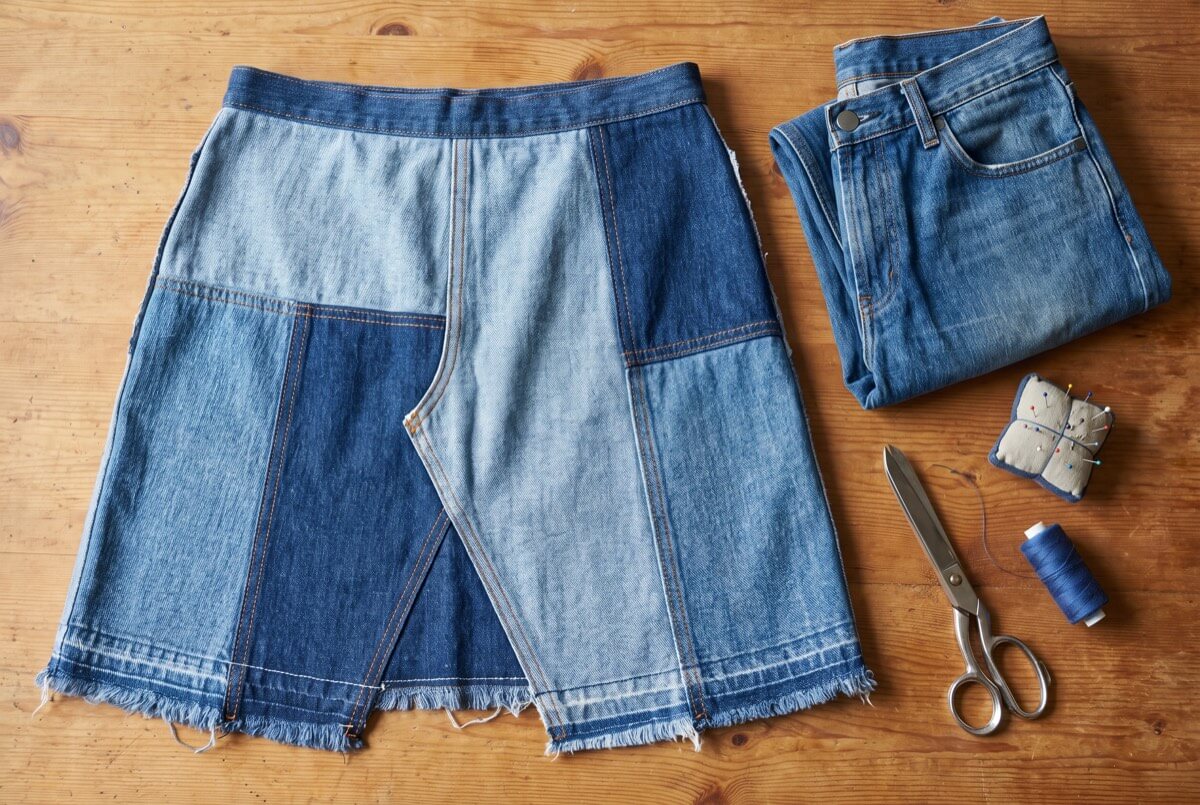
Start with the jeans you have already stopped wearing. Two pairs is enough for a knee-length skirt. Cut the legs off just above the crotch, then open the inseam of each leg so the fabric lies flat. You now have four roughly rectangular panels.
Lay them out before you sew anything. Alternate light and dark, and decide what you want the bottom edge to do. Keep the original hems and you have a finished edge you did not have to make; cut straight across instead and denim simply frays into a soft fringe rather than unravelling. Either is a real finish. Overlap the panels by about a centimetre and pin.
Sew straight seams, then topstitch. A straight stitch holds it; a second line of topstitching in contrast thread makes it look deliberate rather than mended. Reuse the waistband from one of the pairs and you have skipped the hardest part entirely.
It takes an afternoon and no pattern. If it goes wrong, you have lost two pairs of jeans that were already out of rotation, which is a considerably smaller risk than most of the things on this page. If you want more in this direction, our upcycled fashion ideas guide runs through the other techniques worth learning.
7. The Linen Slip Dress for Warm Days
A slip dress in medium-weight linen is the answer to the specific problem of heat you cannot dress for. Cotton clings once the day gets going. Linen sits away from the skin and moves air, which is why it feels cooler at the same temperature.
This one is a midi cut, which puts it in the useful middle ground — long enough for most occasions, short enough not to feel formal on an ordinary day.
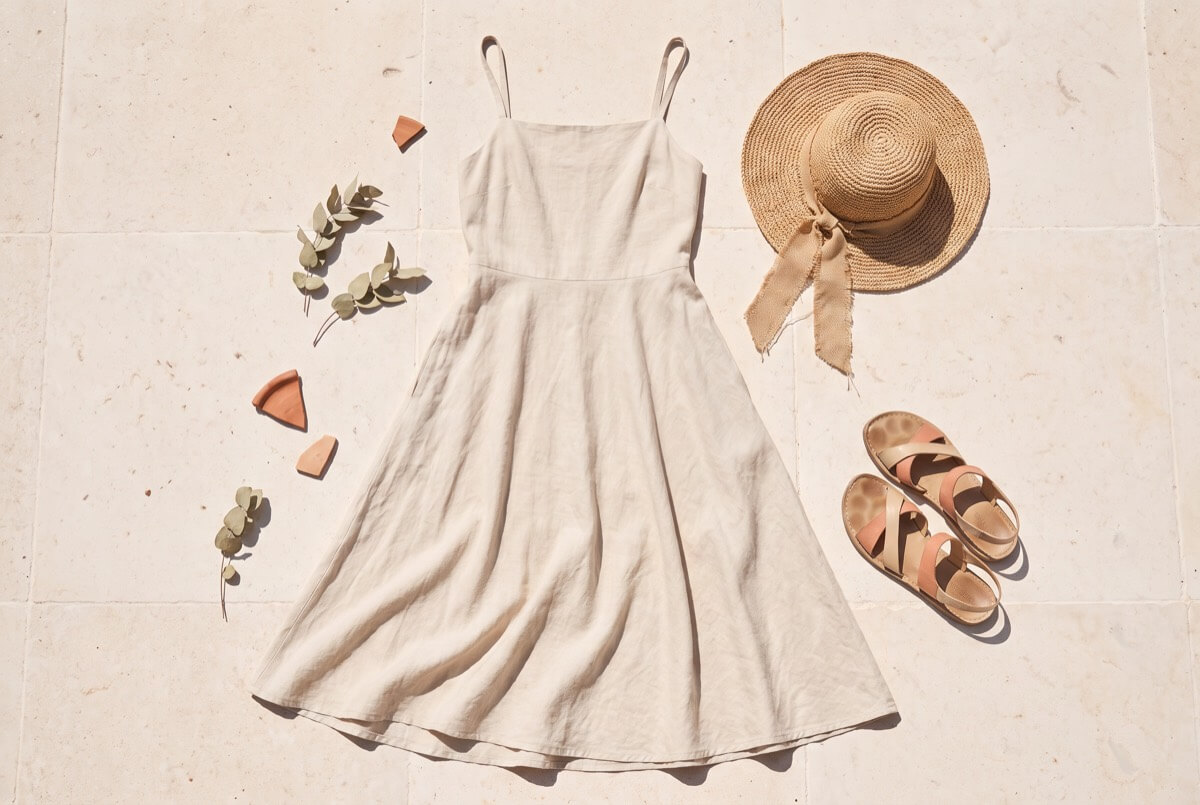
Linen Slip Dress — Midi, Sleeveless
Why We Love It: The maker calls it exceptionally breathable, at a medium 190gsm.
Best For: Hot weather, travel, and events that are smart but not stiff.
- Made from 100% certified European linen, OEKO-TEX certified
- Medium-weight at roughly 190gsm, per the maker’s own listing
- Stone washed, sleeveless, midi slip silhouette
- Sizes run XS through XXL
Heads Up: The maker offers fifteen colours but this listing does not let you pick one, so confirm the colour before ordering. Linen also creases the moment you sit down — if that will bother you, this is not your fabric.
For the days when nothing heavier is bearable
8. The Long Linen Dress Worth Keeping for Years
If you buy one thing from this guide, we would make it this one. A long linen dress with pockets is the piece that gets worn to a wedding in June, over a swimsuit in August, and with boots and a jumper in October. It has the longest life of anything here.
If you are weighing this against the slip dress above, the difference is what each one is for. The slip is the hot-day default you reach for without thinking. This is the occasion piece you keep — and then find yourself wearing on ordinary days anyway.
Linen also improves with age in a way almost no other fabric does. The stone wash starts it soft; five years of washing takes it somewhere better. The pieces people keep longest are rarely the ones that looked best on day one.
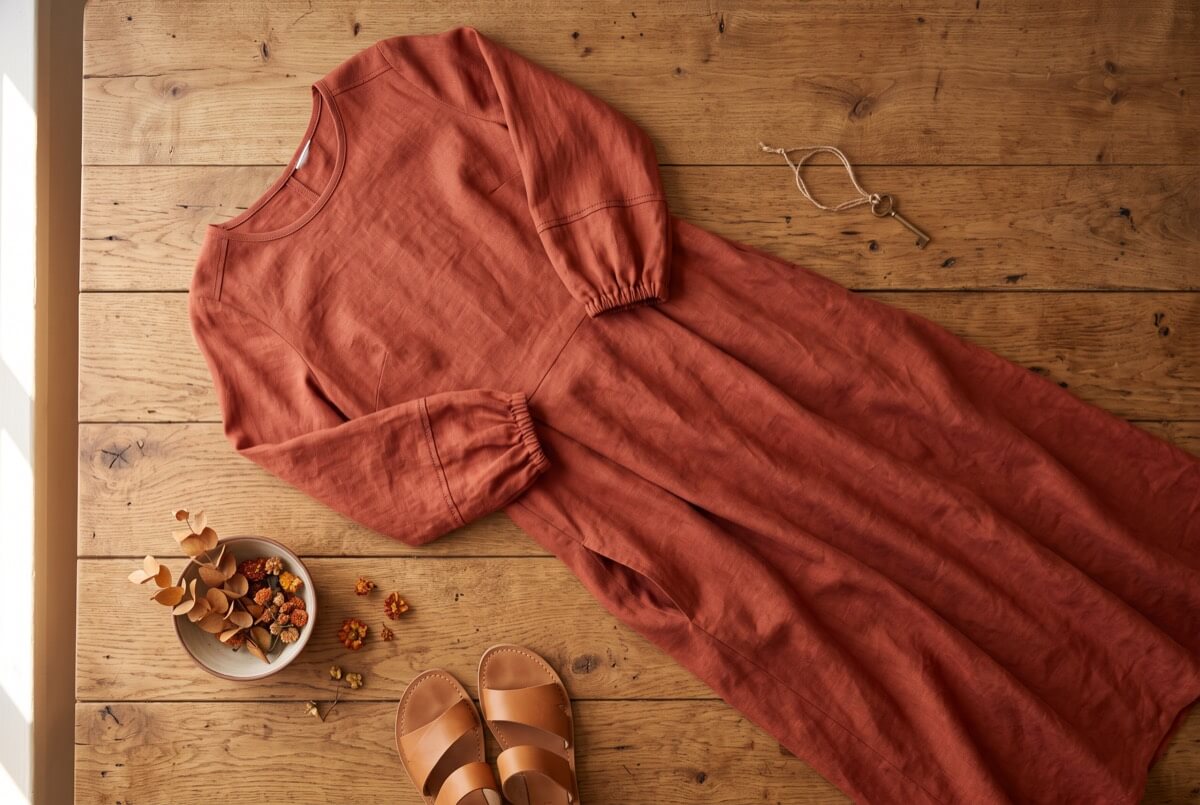
Long Linen Dress — A-Line, With Pockets
Why We Love It: Inseam pockets on a long dress is a small thing that changes how much you actually wear it.
Best For: Weddings, holidays, and the years after both.
- Made from 100% certified European linen, OEKO-TEX certified
- Medium-weight at roughly 190gsm, stone washed for softness
- A-line cut with an oval neckline and gathered cuffs
- Inseam pockets, and sizes from XS to XXL
Pro Tip: Wash it cold and hang it damp. Linen dries into the shape you hang it in, which means most of the ironing disappears if you get that bit right.
Heads Up: It creases, enthusiastically, forever — that is linen, and no amount of care changes it. The same colour caveat applies too: fifteen colours exist, and the listing does not let you choose.
The one you will still be wearing in five years 🌿
❤ Frequently Asked Questions About Zero-Waste Fashion
What does zero-waste fashion actually mean?
Strictly, it means clothing made without sending offcuts to landfill — through pattern cutting that uses the whole width of the cloth, or by making garments from fabric that already exists. Loosely, and more usefully, it means buying in a way that does not create waste at the other end either: fewer pieces, worn longer, repaired rather than replaced.
Is upcycled fashion the same as secondhand fashion?
No. Secondhand is a garment sold on unchanged. Upcycled means the material has been remade into something different — roll-end wool cut into a new dress, or old jeans stitched into a skirt. Secondhand is the lower-impact option; upcycling is what rescues fabric that could not be sold as it was.
How do I know if a brand is genuinely sustainable?
Look for specifics. A brand that says “eco-friendly” and nothing else is telling you nothing. A brand that says 100% certified European linen, OEKO-TEX certified, or 72% wool from roll ends is telling you something you can check. Certifications like OEKO-TEX and Lenzing are not perfect, but they are verifiable, which vague adjectives are not.
Can zero-waste fashion be affordable?
Yes, and this guide spans a range rather than clustering at one end. The cheapest zero-waste option is always the one you already own, followed by resale, followed by new pieces chosen to last. If a piece here is beyond what you want to spend, the skirt you already have and wear weekly is still the better environmental answer.
How should I care for linen and upcycled pieces?
Cold water, gentle cycle, and air drying covers almost everything on this page. Tumble dryers are what actually destroy clothes — the heat and agitation break down fibres far faster than wearing them does. Linen prefers to dry naturally and can be ironed while slightly damp if you want it crisp.
What is the single easiest change to make?
Wash less, and wash cooler. Most clothes are cleaned long before they need it, and every wash costs fibre. After that: mend the small things. A replaced button or a restitched seam buys years, and neither requires any skill you do not already have.
Final Thoughts: Dress Well, Waste Less
None of these eight pieces will save the planet, and it would be dishonest to suggest otherwise. What they will do is take up a slot in your wardrobe that would otherwise be filled by something made carelessly — and if they last as long as they should, that slot stays filled for years.
That is really the whole argument. Not perfection, not a wardrobe rebuilt overnight, just the next thing you buy being a little better than the last one, and worn until it is genuinely finished.
If you only take one thing from this page, make it the long linen dress. It has the longest life of anything here, and the pieces you keep longest are the only ones that ever really count.